


Buying Emergency Food for Your Family
- → Buying Emergency Food for Your Family (Complete Guide)
- → How Much Emergency Food Does a Family Actually Need?
- → Will Our Emergency Food Actually Last as Long as We Think?
- → Is 2,000 Calories Per Person Per Day Really Necessary?
- → What Is the Best Emergency Food for a Family?
- → What's the Difference Between Freeze-Dried, Dehydrated, and Grocery Food?
- → How Long Does Emergency Food Really Last?
- → Should I Compare Emergency Food by Price, Calories, or Servings?
- → Can Emergency Food Work for Allergies or Special Diets?
- → Why Can't I Just Buy Extra Food at the Grocery Store?
- → What Are the Biggest Mistakes Families Make When Buying Emergency Food?
- → What Is Needed to Prepare Emergency Food?
- → Will My Family Actually Eat Emergency Food?
How Long Does Emergency Food Really Last?
This question comes up early for most families, and for good reason. Emergency food is often marketed with long shelf-life claims. Ten years. Twenty years. Sometimes even longer. That sounds reassuring, but it also raises a reasonable question. Is that true, or just marketing language?
Understanding shelf life helps families plan calmly and buy more confidently. It also prevents two common mistakes: assuming emergency food can withstand any storage conditions, or assuming it goes bad far sooner than it actually does.
What “Shelf Life” Actually Means
Shelf life is not a countdown clock where food suddenly becomes unsafe on a specific date. Instead, it’s an estimate of how long food is expected to retain its intended taste, texture, and nutritional value when stored under proper conditions.
For grocery store food, shelf life is typically measured in months to a few years because it’s formulated and packaged for shorter storage and quicker use.
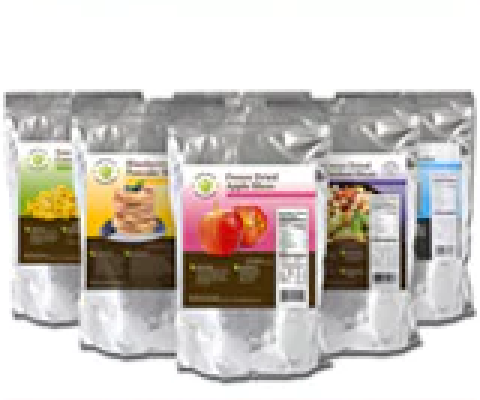
Emergency food is different. Shelf life is usually measured in multiple years or even decades because the food is manufactured and packaged to slow natural breakdown. This includes steps such as removing moisture, limiting oxygen, and sealing food in protective packaging. When companies say “up to 25 years,” they are describing what is possible under ideal storage conditions. This is not a guarantee.
See more: What's the Difference Between Freeze-Dried, Dehydrated, and Grocery Food?
Storage Conditions Matter More Than the Date
In most cases, emergency food does not carry a traditional expiration date or guarantee. That’s because shelf life is based on proper storage, not a fixed timeline.
Temperature is one of the biggest factors affecting how long emergency food really lasts. Cooler, stable temperatures slow the chemical reactions that cause food to degrade over time. Heat speeds those reactions up, and repeated temperature swings can be just as damaging.
Two families can buy the same food on the same day and have very different results years later based entirely on how the food is stored. If storage conditions are poor, any shelf life estimate no longer applies.
A commonly cited rule in food science is that for most stored foods, every 10°F increase in storage temperature cuts shelf life roughly in half. For this reason, temperatures around 70°F or cooler are generally considered ideal for long-term food storage.
This principle is widely used in food safety, food manufacturing, and storage guidance. It applies to dry foods, packaged foods, and long-term storage products. The reverse is also true: cooler, stable temperatures help extend shelf life.
In warmer climates, where indoor temperatures are harder to control during summer months, families should plan for a reduced shelf life and be prepared to replace food sooner.
Humidity also plays a role. Moisture in the air can slowly work its way into packaging over time, especially when seals are stressed by heat and temperature changes. This is why long-term food storage should be kept in a dry, climate-controlled space whenever possible.
This is also why food that has been stored by someone else carries more uncertainty. Even if the packaging appears intact and the original purchase date is known, there is no reliable way to verify how the food was stored over time. Heat damage isn’t always visible, but it can significantly shorten shelf life.
Shelf Life vs. Reality
Emergency food does not suddenly become unsafe the moment it reaches a listed date. Shelf life is primarily about quality, not safety.
Over time, taste may dull, texture may change, and some nutrients may slowly degrade. Properly stored emergency food often remains usable well beyond its listed shelf life, especially staple items like grains and simple meals.
That said, shelf life estimates only apply if the food stays sealed and stored properly. Once a package is opened, the clock changes and the food should be treated like everyday pantry food.
Instead of asking, “Will this last 25 years?” a more helpful question is, “Is this food designed for long-term storage, and am I storing it in a way that preserves taste, texture, and nutrition as well as possible?” When those answers are yes, shelf life becomes a strength in your plan rather than a source of worry.
How to Tell If Emergency Food Has Gone Bad
Emergency food does not usually “go bad” in the same way fresh or refrigerated food does. Because it is dried and packaged to remove moisture and oxygen, most problems show up as quality or packaging issues, not sudden safety failures.
The first thing to check is the packaging. If a pouch or can is swollen, leaking, punctured, or has lost its seal, the food inside should be discarded. A broken seal allows air and moisture in, which shortens shelf life quickly.
Next, look for visible changes. Emergency food should remain dry and free-flowing. Signs of concern include moisture inside the package, clumping that will not break apart, or visible mold. These are clear indicators the food is no longer reliable.
Smell is another useful indicator. While long-stored food may not smell fresh, it should not smell sour, musty, or rancid. If the odor is unpleasant or unusual, it’s best to throw the food away rather than try to test it.
Taste should never be used as a safety check. If there is any doubt about the condition of the food, discard it and replace it. Emergency food is meant to reduce stress, not create risk.
Most issues can be avoided by storing food in a cool, dry, temperature-stable location and occasionally checking containers for damage. When properly stored, true spoilage is rare, and quality changes tend to happen gradually, not suddenly.
Key Takeaway
Emergency food is designed to last for many years, but its true shelf life depends on how it is made and how it is stored. When properly packaged and kept in cool, dry, stable conditions, quality changes tend to happen slowly, not suddenly.
Shelf life isn’t magic, and it isn’t a promise printed on a label. It’s a partnership between how the food is produced and how it’s cared for over time. When families understand that relationship and store their food thoughtfully, they can trust it to be there when it matters, without stress or constant second-guessing.
Download Our Complimentary Smart Start Guide to Emergency Food Storage
This article is designed to stand on its own. For readers who want a simple planning reference, the Smart Start Guide to Emergency Food Storage offers a helpful companion overview.
Sources and References
The following sources align this article with established public guidance on food safety, storage, and emergency preparedness.
-
Ready.gov — Food
Explains recommended food storage practices and emergency planning. -
USDA FSIS — Food Product Dating
Clarifies the meaning of expiration and best-by dates, and that most dates describe quality rather than safety. -
FoodSafety.gov — FoodKeeper App
Explains how storage conditions affect food quality and how long common foods keep. -
CDC — Keep Food Safe After a Disaster or Emergency
Covers safe handling and storage considerations during and after emergencies. -
Utah State University Extension — 7 Factors That Prolong Your Food Storage Supply
Explains how storage temperature affects shelf life, including the commonly cited rule that each rise of roughly 10 degrees cuts the shelf life of stored food about in half.
Reviewed for accuracy against current FEMA, USDA, CDC, and university extension guidance.