


Buying Emergency Food for Your Family
- → Buying Emergency Food for Your Family (Complete Guide)
- → How Much Emergency Food Does a Family Actually Need?
- → Will Our Emergency Food Actually Last as Long as We Think?
- → Is 2,000 Calories Per Person Per Day Really Necessary?
- → What Is the Best Emergency Food for a Family?
- → What's the Difference Between Freeze-Dried, Dehydrated, and Grocery Food?
- → How Long Does Emergency Food Really Last?
- → Should I Compare Emergency Food by Price, Calories, or Servings?
- → Can Emergency Food Work for Allergies or Special Diets?
- → Why Can't I Just Buy Extra Food at the Grocery Store?
- → What Are the Biggest Mistakes Families Make When Buying Emergency Food?
- → What Is Needed to Prepare Emergency Food?
- → Will My Family Actually Eat Emergency Food?
Can Emergency Food Work for Allergies or Special Diets?
For many families, this question is not optional. Food allergies, intolerances, medical diets, or deeply held eating patterns are part of daily life. When people start looking at emergency food, they often worry that long-term storage may not be an option for them. Emergency food only helps if your family can actually eat it.
Medical needs and food sensitivities do not disappear in an emergency. Families managing common needs such as food allergies, gluten or dairy intolerance, vegetarian diets, or sodium-sensitive eating often wonder whether emergency food can realistically work for them. Planning works best when you assume your normal considerations will still apply, just with fewer options.
The good news is that emergency food can work for allergies and special diets. The key is understanding what is realistic to expect, what information matters most, and where families still need to plan intentionally.
Why Allergies and Special Diets Change How You Evaluate Food Storage
Emergency food is designed for shelf life first. That means it is processed, dried, and packaged differently than everyday food. Those processes do not automatically make food unsafe for special diets, but they do mean ingredients matter more than marketing labels.
Families with allergies or restrictions are often less worried about variety and more worried about trust. They want to know what is in the food, how it was made, and whether the information is clear enough to make a confident decision. Emergency planning should reduce stress, not add a new layer of risk.
What Emergency Food Can and Cannot Realistically Do
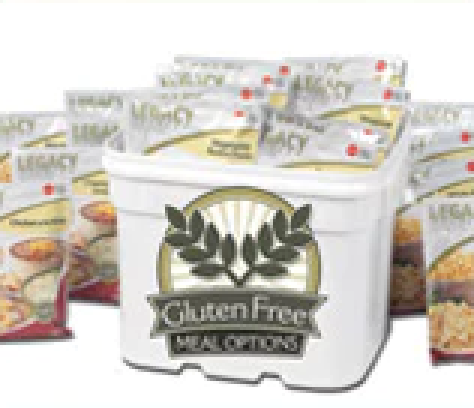
Emergency food can provide safe calories, familiar meals, and reliable nutrition for many common dietary needs. Gluten-free, dairy-free, vegetarian, and lower-sodium options are widely available. Some allergen exclusions are easier to accommodate than others because of how foods are manufactured.
Emergency food cannot guarantee zero risk for severe allergies unless the manufacturer controls for cross-contact and clearly states that on their labeling. Families managing life-threatening allergies should treat emergency food the same way they treat everyday food. Read labels carefully, look for allergen statements, and do not rely on assumptions or shorthand claims.
Emergency food is not about finding a perfect match. It is about maintaining as much control and predictability as possible when choices are limited.
What to Look for First When Allergies Are Involved
Emergency food companies vary widely in how transparent they are with ingredients and allergen information. Some offer clearly labeled meals that exclude certain allergens. Others provide individual ingredients that can be combined with foods you already use. The challenge is not availability. It is knowing how to evaluate what you are looking at.
Ingredient transparency is non-negotiable. Every meal should list ingredients and major allergens clearly and consistently. If that information is hard to find or incomplete, that is a signal to pause.
Simplicity helps. Fewer ingredients generally mean fewer surprises. Meals built around basic grains, proteins, and vegetables are often easier to evaluate than highly processed combinations.
Planning for Special Diets Without Overcomplicating Things
Emergency food does not need to cover every meal to be useful. Many families plan a base of safe, broadly usable meals and then supplement with items they already know work for their household. This approach keeps planning realistic and flexible.
Many families already manage food this way in daily life, and emergency planning works best when it builds on habits that are already familiar.
For example, a family managing lactose intolerance may prioritize dairy-free entrees and keep familiar shelf-stable items on hand to round out meals. A vegetarian household may focus on meatless entrees and protein sources while adding oils, spices, or grains they already use.
Families often feel pressure to find a single solution that checks every box. In reality, good emergency planning is layered. Emergency food works best when it supports how your family already eats, rather than forcing a new system during a crisis.
When to Slow Down and Double-Check
If a family member has a severe allergy, it is reasonable to take extra time. Look for manufacturers that clearly address allergen handling. Reach out for documentation if needed. Planning carefully is not overthinking. It is responsible.
Emergency food should reduce uncertainty. If something creates more doubt instead of clarity, it is worth reconsidering.
Download Our Complimentary Smart Start Guide to Emergency Food Storage
This article is designed to stand on its own. For readers who want a simple planning reference, the Smart Start Guide to Emergency Food Storage offers a helpful companion overview.
Sources and References
These recommendations align with public health and food safety guidance on allergen labeling, ingredient transparency, special dietary considerations, and emergency food planning.
-
FDA — Food Allergies: What You Need to Know
Provides guidance on major food allergens, labeling requirements, and how consumers should evaluate ingredient statements when selecting packaged foods. -
Ready.gov — Food
Provides general guidance on household emergency food planning and preparedness, including considering special dietary needs.
Reviewed for accuracy against current FDA and FEMA (Ready.gov) guidance.